You worry about AI taking your job because you know too much about AI, research finds
Nearly 43% of highly AI-knowledgeable respondents expect AI could take over their work soon, far more than those with limited AI understanding.
 Fransebas

AI experts fear job loss far more than people with limited AI knowledge do.
 Alex Knight / Pexels
If you have been paying close attention to artificial intelligence, you may have noticed your worries about job security growing instead of shrinking. According to the AI Monitor 2026 from TU Darmstadt, the more you understand AI, the more you worry it’ll take your job, not less. Based on a representative survey of over 2,000 people in Germany, the study breaks the long-held belief that fear comes from ignorance.
The more you know, the more you worry
 Omar Lopez-Rincon
Almost half of people with very strong AI knowledge, around 43%, expect AI could soon take over their work. That number drops sharply among people who understand AI less. Professor Peter Buxmann, who led the study, called this both remarkable and worrying, since most debates assume concerns stem from a lack of information.
His data says otherwise. People who understand AI best also see its disruptive potential most clearly. What matters even more than industry is whether your actual output can be digitized. If your job produces text, analysis, reports, code, or presentations, you’re far more exposed than someone whose work depends on physical presence. However, daily AI use at most workplaces still remains fairly limited for now.
A knowledge gap making things worse
Despite how disruptive AI already feels to many, most people haven’t been trained to handle it. Just 15% of respondents have participated in any kind of AI training so far, revealing a real skills gap in AI usage. The concerns people actually have are also surprisingly grounded.
AI hallucinations and data privacy top the list of worries, while only four in ten respondents consider a future superintelligence even likely. Younger workers reported more job anxiety than older ones, and overall concern about job security climbed across every occupational group compared to last year.

The fix isn’t telling people to calm down
Buxmann pushed back against simple reassurance as a fix. People who lose jobs lose more than income, they lose social connection and a sense of purpose too. Rather than dismissing these concerns, he argues they should be addressed through better training and honest conversations about how work is changing.
While generative AI will create new kinds of jobs, he says, it’s unlikely to replace disappearing roles on a one-to-one basis. So the real takeaway for policymakers and employers is that preparation matters more than reassurance ever will.

Manisha Priyadarshini is a tech and entertainment writer with over nine years of editorial experience.
The Internet Archive just made decades of vintage AI playable in your browser, and it’s fascinating
Before large language models, an entire generation of home computer software was already faking the experience of talking to something alive.
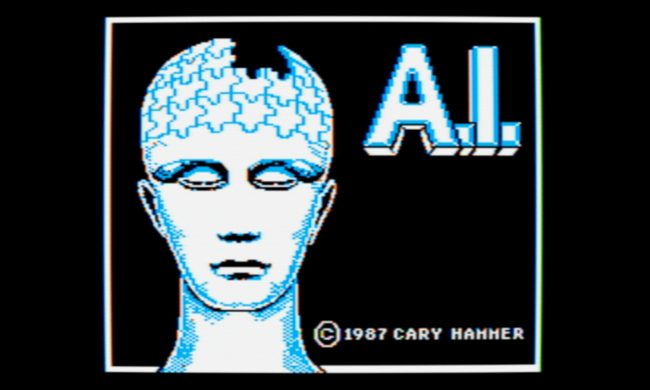
The Internet Archive has a habit of preserving unique things, ones that nobody else thought about, and its newest collection is the best example yet. I’d say it's one that every AI historian should bookmark.
Curated under the title “Vintage Artificial Intelligence,” the collection contains decades of software that tried to convince people that they were talking to a thinking machine (though with wildly varying success).
Sony and Warner just sued Anthropic over copyrighted music used to train Claude, seeking $150,000 per track
Anthropic's Claude models allegedly learned to write lyrics by pirating the exact songs Sony and Warner now want paid for.

This isn't the first time music publishers have sued a big AI company, but the scale makes it worth your attention. Sony Music and Warner Chappell have filed sweeping new lawsuits against Anthropic.
The publishers claim that Anthropic pirated tens of thousands of copyrighted songs to train Claude (via Business Insider). This chatbot has become quite popular for its accuracy and ability to handle complex tasks.
Stung by OpenAI pulling GPT models from Cursor? Anthropic offers a timely lifeline with higher Claude limits
OpenAI is leaving Cursor, and Anthropic just slid into the DMs

For Cursor users who suddenly found themselves caught in the middle of an AI industry spat, the timing could hardly be worse. OpenAI is reportedly moving to cut off Cursor’s direct access to its models - but Anthropic is stepping in with a rather convenient alternative.
SpaceX has notified Cursor that it intends to terminate its contract for providing OpenAI models, with the shutdown proposed for November 12, 2026, according to OpenAI. Cursor co-founder and CEO Michael Truell confirmed the development, saying OpenAI models account for about 5% of Cursor user traffic and that the company is speaking with OpenAI to resolve the issue.