Southwest Launches a ChatGPT Plugin: What AI Flight Booking Could Look Like
Southwest Airlines is bringing flight discovery into ChatGPT. Here is how AI-assisted flight shopping could change travel planning, where the limits are, and what travelers should expect.
 Netzender Editorial Team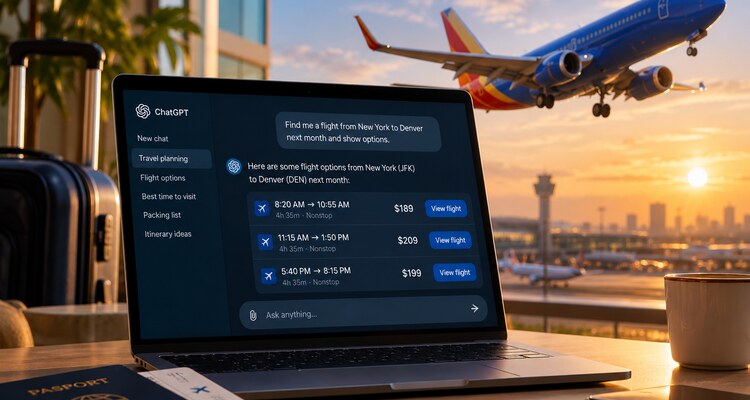
Southwest Airlines is pushing flight discovery deeper into conversational AI by bringing its travel experience into ChatGPT.
The move is another sign that AI assistants are evolving from tools that simply answer travel questions into interfaces that can help users research real trips and move closer to booking.
For travelers, the interesting question is not whether ChatGPT can suggest destinations. It already can. The bigger shift is whether an AI assistant can become part of the actual flight-shopping workflow.
What is the Southwest ChatGPT plugin?
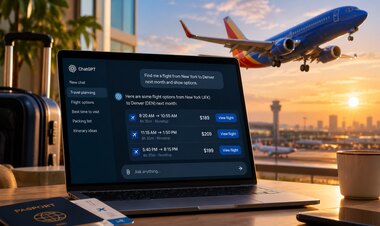
The Southwest integration is designed to let users explore Southwest flight options from within ChatGPT instead of starting every search on an airline website or traditional travel search engine.
That means a traveler could begin with a natural-language request such as a destination, approximate dates or trip preference and use the conversation to narrow down possible flights.
The exact capabilities can evolve as Southwest and OpenAI expand the integration, so travelers should still verify final fares, availability and booking details directly with Southwest before purchasing.
Why this matters for travelers
Traditional flight search often requires users to know exactly what they want before they begin: departure airport, destination, dates and sometimes preferred times.
Conversational AI can work differently.
A traveler might start with a vague request such as, “Where can I fly for a three-day warm-weather trip next month?” and progressively refine that request through follow-up questions.
That makes AI especially useful during the discovery phase of trip planning.
From trip planning to flight shopping
ChatGPT has already become a popular tool for itinerary ideas, destination research and travel planning.
Airline integrations move the assistant one step closer to commerce.
Instead of giving only general advice, an AI assistant can potentially connect travel intent with live airline information and help users identify actual options.
This is an important shift because the highest-value part of travel search is often not inspiration itself, but the moment when a traveler moves from research toward a transaction.
How is this different from Google Flights?
Google Flights is optimized for structured comparison. It is excellent when you already know where and roughly when you want to travel.
A conversational AI assistant is potentially stronger when the question is less structured.
For example, a user might ask for a weekend destination with warm weather, a short flight, a moderate budget and good food. ChatGPT can reason across those preferences before the traveler starts comparing individual flights.
The two approaches are therefore more complementary than interchangeable.
How is this different from Expedia or an online travel agency?
Online travel agencies are designed around inventory, price comparison and transactions.
ChatGPT is primarily designed around conversation and reasoning.
That means an airline integration inside ChatGPT can help reduce the friction between asking a travel question and reaching a relevant airline option.
However, travelers should not assume that an AI assistant automatically searches every airline, every fare class or every distribution channel.
What can AI do well in flight shopping?
- Translate vague travel ideas into specific search criteria.
- Compare trip options in plain language.
- Help travelers understand trade-offs between departure times, trip length and convenience.
- Combine flight research with destination and itinerary planning.
- Answer follow-up questions without forcing the user to restart a search.
Where should travelers still be careful?
Flight pricing and availability can change quickly.
An AI assistant should therefore be treated as part of the research and discovery workflow rather than the final source of truth for a ticket purchase.
Before booking, travelers should confirm the current fare, baggage policy, change rules, seat availability and final itinerary on the airline or booking provider.
Could ChatGPT become a travel booking layer?
This is the larger strategic question.
If more airlines, hotels and travel platforms connect their inventory and services to AI assistants, users may increasingly begin travel shopping inside a conversation rather than on a search-results page.
That would not necessarily eliminate airline websites, Google Flights or online travel agencies.
Instead, ChatGPT could become a new layer above them: the place where users express intent, compare ideas and decide which booking path to follow.
Why airlines are interested in conversational AI
Airlines have a strong incentive to reach travelers earlier in the decision process.
If a traveler starts planning inside an AI assistant, an airline that can surface relevant flights during that conversation gains a new distribution opportunity.
Direct airline integrations may also help carriers maintain a stronger relationship with customers instead of depending entirely on traditional search engines and intermediaries.
What should travelers expect next?
Expect more travel brands to experiment with AI-native discovery.
Over time, integrations could expand beyond flight search into fare explanations, loyalty programs, baggage information, itinerary changes and personalized recommendations.
The most useful experiences will be the ones that combine conversational flexibility with accurate real-time travel data.
The bigger picture
Southwest entering ChatGPT is less important as a single airline feature than as a signal of where online travel may be heading.
AI assistants are beginning to sit between user intent and travel inventory.
If that model works, planning a trip may increasingly begin with a conversation rather than a search form.
For travelers, that could make discovery easier. For airlines and travel platforms, it creates a new competition for visibility inside AI-generated recommendations and shopping experiences.
Related Netzender guides
For a broader look at how AI assistants compare in everyday work and research, see ChatGPT vs Claude vs Gemini for Work.
Travelers interested in AI-assisted trip planning should also follow Netzender's Travel Tech coverage as airlines and booking platforms add more conversational tools.
Sources
This article is based on Southwest Airlines announcements and current reporting about its ChatGPT integration. Travelers should verify live fares, availability and booking conditions directly with Southwest before purchasing.