Hidden Travel Booking Fees 2026: How to Avoid Extra Charges on Flights and Hotels
Learn how to spot hidden travel booking fees in 2026, compare true hotel and flight prices, avoid preselected add-ons, and understand FTC and DOT rules.
 Netzender Editorial Team
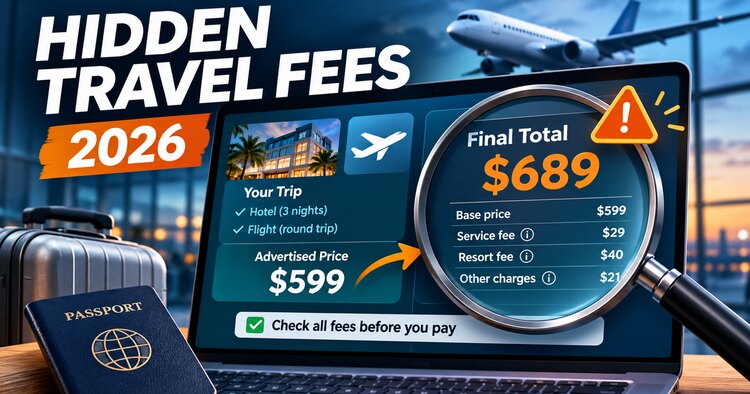
Quick answer: Compare the full amount payable—not just the advertised rate. Check mandatory hotel charges, optional flight extras, preselected services, taxes, and amounts due at check-in before authorizing payment. A November 2026 FTC warning shows why the last screen deserves a careful look.
Updated November 10, 2026. This article focuses on US consumer guidance; rules and remedies vary by booking type and jurisdiction.
At a glance: The FTC’s 2025 rule addresses transparent pricing for covered short-term lodging, while DOT rules address airline fares and optional services. Neither means every travel fee is prohibited.
Why the checkout total matters
A cheap-looking flight or hotel can become an expensive booking when you reach the last screen. The useful number is not the headline rate, the per-night teaser or a price displayed before you choose dates. It is the amount you must actually pay for the trip you intend to take, including unavoidable charges and the extras you deliberately select. In November 2026, the Federal Trade Commission (FTC) reminded travelers to inspect every checkout screen after describing allegations that travel-app customers encountered preselected charges that were not obvious at first glance. The lesson is practical: a prominent button is not proof that every charge is visible above it. Scroll, review and compare before you authorize payment.
What counts as a hidden travel booking fee?
A hidden fee is a charge that is obscured, misleadingly presented or unexpectedly added as a customer moves through a purchase. A mandatory resort fee is different from an optional breakfast upgrade. A tax is different from an automatic tip. Those distinctions matter when you compare offers and when you decide whether a charge may violate a rule. The FTC's Rule on Unfair or Deceptive Fees covers short-term lodging and live-event tickets, not every travel product. For covered lodging, businesses advertising a price generally must show the total including mandatory fees they know and can calculate upfront. Certain government charges and genuinely optional add-ons may be disclosed separately, but they must be disclosed before payment when applicable. The rule is about transparent pricing; it does not ban all fees.
Hotel resort fees, cleaning fees and destination charges
When comparing hotels or vacation rentals, look beyond the nightly rate. A mandatory resort or destination fee, required cleaning charge or unavoidable booking charge can change which listing is cheapest. The FTC's guidance says covered sellers must include unavoidable fees in the upfront total, subject to the rule's defined exceptions. This applies to covered short-term lodging offers, including relevant third-party platforms. A property may still offer optional parking, breakfast, early check-in or upgrades for additional money. Those choices should not be confused with charges that everyone must pay. Read the rate details, cancellation policy and payment schedule, especially when a property collects some money at booking and the rest at check-in.
Airfare: optional services are a separate decision
Airline shopping presents a different mix of pricing rules and practical decisions. A base fare may not include your preferred checked bag, seat selection, onboard meal or other ancillary service. These are not automatically deceptive merely because they cost extra, but you should know what is included in the fare you choose. The US Department of Transportation explains that airlines and ticket agents must not automatically add optional services to the ticket price through preselection. Compare itineraries using the baggage and seat choices you actually need. A lower basic fare can still be the right choice for someone traveling light; it may be the wrong choice for a family checking bags. Also check who is selling the ticket and who will handle a refund or customer-service issue.
What the FTC's November 2026 warning says
The FTC's November 2026 consumer alert describes its case involving the Hopper travel apps. According to the agency's allegations, customers saw a total and a prominent action button while preselected Tip and VIP Support charges were positioned lower on a later screen. The FTC said some customers could miss those charges without scrolling. The case is an illustration of alleged practices, not a reason to assume every travel platform uses the same design. The FTC also announced a $35 million settlement related to its allegations in 2026. When writing about a company or enforcement case, distinguish the regulator's allegations from findings established by a court. The broader consumer takeaway is to inspect the entire interface and reject extras you do not want.
A worked example: advertised price versus payable total
Consider a hypothetical three-night hotel stay advertised at $180 per night. The displayed room subtotal is $540. If a mandatory property charge of $30 per night applies, that adds $90; suppose taxes add another $65. The amount payable becomes $695 before any optional extras. A competing hotel advertising $205 per night with no mandatory property charge might cost $615 before its own applicable taxes. The cheaper-looking headline rate does not necessarily produce the cheaper stay. These are illustrative figures, not quotes from actual hotels. When comparing offers, use the same dates, room type, cancellation terms, number of guests and tax assumptions. Otherwise, a comparison can be misleading even when both sites display their charges correctly.
Seven checks to make before you pay
First, capture the advertised price and the dates or traveler details attached to it. Second, expand every pricing-details panel and scroll to the bottom of each checkout screen. Third, look for prechecked boxes, default tips, premium support and insurance selections; remove anything you did not choose. Fourth, inspect the complete amount payable now and any amount due later at the property. Fifth, confirm the currency and whether a foreign-transaction or currency-conversion charge may apply through your payment provider. Sixth, read cancellation and refund conditions, including whether the booking is refundable or nonrefundable. Seventh, save the final receipt, terms and confirmation email. If the checkout amount does not match what you understood, stop and resolve the difference before pressing Pay.
Compare travel offers on an apples-to-apples basis
Use a simple comparison sheet with columns for base fare or room rate, mandatory fees, taxes, chosen optional services, amount due now, amount due later and cancellation terms. For airfare, include baggage and seat selection only when you expect to purchase them. For lodging, include the whole stay rather than comparing a per-night figure against a total-stay figure. Consider the value of flexibility: a refundable room may be worth more to you than a cheaper nonrefundable rate. Also review the booking channel. Direct and third-party offers can differ in service arrangements, and a refund question may depend on which company is the merchant of record. The lowest number is not always the best overall offer.
What US rules actually protect
The FTC's fee rule took effect on May 12, 2025 and targets deceptive pricing in covered short-term lodging and live-event tickets. The rule generally requires upfront display of the total price including mandatory charges the business knows and can calculate. It permits some charges, such as government taxes and genuinely optional services, to be excluded from that upfront total if the required disclosures are made before payment. Airlines operate under a separate set of Department of Transportation rules. DOT guidance addresses full-fare advertising, optional-service disclosures and refund rights. Do not assume that the FTC lodging rule automatically governs an airline ticket or that every surprise charge is illegal. The correct question is which rule applies, what was disclosed and whether you agreed to the charge.
If you discover a charge you did not authorize
Start by saving screenshots, receipts, emails and any price breakdown that shows the discrepancy. Contact the booking company in writing and identify the exact amount and why you believe it was not disclosed or authorized. Ask for a correction or refund and keep a record of the response. If the charge appears on a payment card, review your card issuer's dispute procedures and deadlines; the applicable protections depend on the transaction and jurisdiction. For an airline refund issue, consult the DOT's official consumer guidance. If you believe a seller used deceptive or undisclosed fees, report the experience to the FTC at ReportFraud.ftc.gov. Filing a report does not guarantee an individual refund, but it can help regulators identify patterns.
What to know about flight refunds
For flights to, from or within the United States, DOT rules may require refunds in specific situations such as cancellations or significant schedule changes when a passenger declines an alternative. The merchant of record matters: DOT explains that the airline or ticket agent shown as the charging entity may be responsible for processing certain refunds. The familiar 24-hour reservation requirement applies to airlines under specified conditions for tickets booked at least seven days before departure, but it does not apply in the same way to online travel agencies or other third-party agents. Check the seller and the precise rules rather than assuming every booking can be canceled without penalty within a day.
Before your next trip: a two-minute fee audit
Build a habit of pausing on the final payment page. Read the complete screen, compare the amount with your notes and confirm which extras are selected. Ask three questions: Is this fee mandatory? Was it included in the displayed price where the applicable rules require it? Did I intentionally agree to any optional charge? Then check the cancellation terms and save your receipt. A two-minute review will not eliminate every travel cost, but it can catch avoidable add-ons and make it easier to challenge a charge later. For a broader pre-trip budget, include connectivity, transport to the airport, local taxes and baggage costs alongside the headline booking price.
Frequently asked questions
Are hotel resort fees illegal in 2026? Not categorically. The FTC rule addresses how mandatory fees are displayed and described for covered lodging; it does not ban every fee. Does the FTC rule cover flights? The specific 2025 FTC rule covers short-term lodging and live-event tickets; airline pricing has separate DOT requirements. Can a website charge for an optional upgrade? Yes, genuinely optional upgrades can cost money, but you should review what you selected and the applicable disclosure rules. What if a fee appears only at the last step? Check whether it is mandatory or optional and whether the seller's disclosure complies with the applicable rules; document the screen before paying. Where can I report deceptive travel fees? The FTC directs consumers to ReportFraud.ftc.gov. For airline consumer-rights questions, consult the DOT's aviation consumer protection pages.