eSIM vs Pocket Wi-Fi vs Roaming: Which Is Best for International Travel?
Compare eSIM, pocket Wi-Fi and carrier roaming for international travel, including cost, convenience, multi-device use, hotspot needs and the best option for different travelers.
 Netzender Editorial Team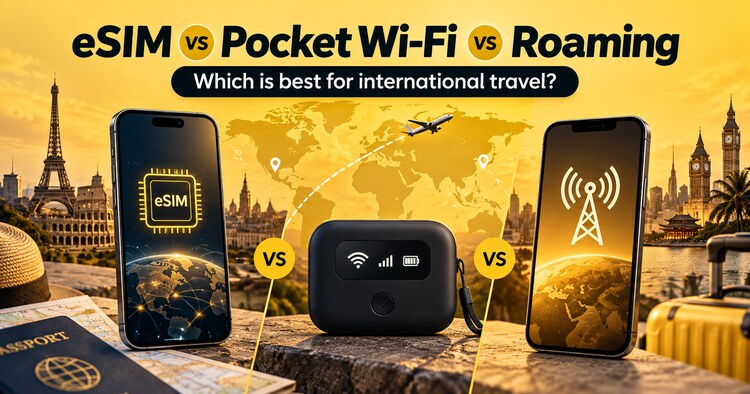
Staying connected abroad used to mean choosing between expensive carrier roaming and buying a local SIM after landing. Today, international travelers have another practical option: the travel eSIM. But an eSIM is not automatically the best choice for every trip.
A solo traveler carrying one phone has very different connectivity needs from a family sharing several devices, a remote worker who needs a laptop online for hours, or a business traveler who values simplicity more than the lowest possible price.
This guide compares eSIM, pocket Wi-Fi and carrier roaming from a practical travel perspective. Instead of asking which technology is universally best, we will look at which option makes the most sense for different travelers, devices and trip styles.
Quick Answer: eSIM, Pocket Wi-Fi or Roaming?
For most solo travelers with a compatible unlocked phone, an eSIM is usually the best balance of convenience, flexibility and cost. You can install a plan before departure, keep your physical SIM in the phone and connect shortly after arrival.
Pocket Wi-Fi becomes more attractive when several people or devices need to share one connection. It can work well for families, couples carrying multiple devices and travelers who use laptops or tablets heavily.
Carrier roaming is generally the easiest option because it requires almost no setup. It can make sense for short trips or travelers whose existing mobile plan already includes affordable international service.
| Option | Best For | Main Advantage | Main Trade-Off |
|---|---|---|---|
| eSIM | Solo travelers, frequent travelers, light remote work | Convenient and usually cost-efficient | Requires a compatible unlocked phone |
| Pocket Wi-Fi | Families, groups, multiple devices | Shares one connection across several devices | Extra hardware and charging |
| Carrier roaming | Short trips and convenience-first travelers | Almost no setup | Can be expensive or restrictive |
What Is a Travel eSIM?
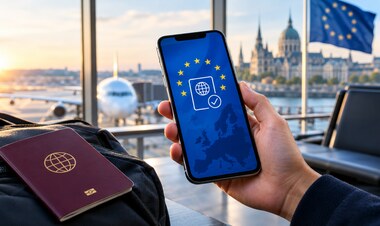
An eSIM is a digital SIM profile that can be installed on a compatible phone without inserting a physical SIM card. For international travel, that means you can purchase a data plan for your destination and activate it directly on your phone.
The biggest advantage is simplicity. There is no additional hardware to carry, rent or return.
If you are new to eSIM technology, start with our complete travel eSIM guide, which covers device compatibility, carrier locks, installation, activation and the settings worth checking before departure.
What Is Pocket Wi-Fi?
Pocket Wi-Fi, also called a portable Wi-Fi hotspot or mobile Wi-Fi router, is a small battery-powered device that connects to a cellular network and creates a private Wi-Fi network around you.
Your phones, laptops and tablets connect to the pocket Wi-Fi device just as they would connect to Wi-Fi at home.
Its main advantage is straightforward: one cellular connection can serve several devices at the same time.
What Is International Carrier Roaming?
Carrier roaming lets your normal mobile SIM connect to partner networks outside your home country. You keep your regular phone number, SIM and carrier relationship.
From a usability perspective, roaming is difficult to beat. In many cases you land, turn on your phone and continue using it.
The main uncertainty is cost. Some mobile plans include international roaming, some charge a daily fee and others have destination-specific data limits.
eSIM vs Pocket Wi-Fi vs Roaming: The Real Differences
Number of Devices
If you travel with only one smartphone, eSIM has a major simplicity advantage. There is no second device and no separate battery to maintain.
Once several devices enter the picture, pocket Wi-Fi becomes more interesting. One hotspot can potentially connect multiple phones, laptops and tablets.
An eSIM can often serve multiple devices through phone tethering, but hotspot policies vary between plans. Continuous tethering can also drain your phone battery faster.
Solo Travel vs Group Travel
For a solo traveler, carrying a separate pocket Wi-Fi unit often creates more complexity than value. An eSIM keeps your connectivity on the phone already in your pocket.
For a family or group, one shared hotspot may reduce the need to purchase separate travel plans for every device.
There is an important limitation, however: when the group separates, the person carrying the pocket Wi-Fi takes the shared internet connection with them. Individual eSIMs give each traveler independent connectivity.
Airport Convenience
An eSIM can usually be purchased and installed before departure. That means there is no need to find a SIM shop or rental counter after landing.
Carrier roaming is even simpler when already included in your plan.
Pocket Wi-Fi may involve pickup, hotel delivery, shipping or a return procedure at the end of the trip.
Battery Life
Battery management is one of the most overlooked differences.
With an eSIM, you use the phone you already charge every day. But frequent hotspot use can increase battery consumption significantly.
Pocket Wi-Fi transfers the hotspot workload to a separate device, but that creates another battery you need to monitor and charge.
Reliability and Failure Points
Every travel connectivity method has potential failure points.
With eSIM, common problems include device compatibility, carrier lock status, activation settings and network availability.
Pocket Wi-Fi adds hardware-related risks such as battery failure, loss or physical damage.
Carrier roaming avoids most setup issues but leaves you dependent on your home carrier's roaming agreements, coverage and pricing.
Which Option Is Usually Cheapest?
There is no single cheapest option because cost depends on destination, trip duration, data usage and the number of travelers.
For one person using a moderate amount of mobile data, an eSIM is often competitively priced because you purchase only the amount or duration you need.
For several travelers sharing one connection, pocket Wi-Fi may reduce the effective cost per person. But the real price can include rental charges, delivery fees, insurance or replacement fees.
Carrier roaming may appear expensive per day but can still be reasonable for a two- or three-day trip where convenience matters more than optimizing every dollar.
Do Not Compare Price Without Comparing Data
A cheaper plan is not necessarily better if it runs out halfway through the trip.
Navigation, messaging and email generally use much less data than streaming video, video meetings, cloud backups or laptop tethering.
Before choosing your connectivity method, estimate how much you are likely to consume using our guide to how much mobile data you need for an international trip.
Best Option for Solo Travelers
Best starting point: eSIM.
Solo travelers generally benefit from minimizing the number of devices, cables and chargers carried during the trip. An eSIM keeps connectivity on the phone itself and can usually be prepared before departure.
Carrier roaming remains a strong alternative if your existing plan already includes affordable international service.
Best Option for Couples
For couples who frequently separate during the day, two individual eSIMs are usually more flexible than one shared pocket Wi-Fi device.
If both travelers stay together and use several devices, pocket Wi-Fi becomes more competitive.
The key question is whether independent connectivity or shared connectivity matters more.
Best Option for Families and Groups
Pocket Wi-Fi has its clearest advantage for families and groups.
One portable hotspot can potentially keep several phones and tablets connected without configuring separate travel plans on every device.
However, families should consider what happens when people split up. If parents and teenagers explore different areas, a single shared hotspot can quickly become inconvenient.
Best Option for Remote Workers
Remote workers should prioritize connection reliability, hotspot rules and data allowance rather than simply choosing the cheapest plan.
Video meetings, large uploads and cloud-based work can consume far more data than everyday travel tasks.
An eSIM with generous tethering can be extremely convenient. A dedicated pocket Wi-Fi device may be better when several work devices need to stay online for long periods and you do not want your phone acting as the hotspot all day.
Best Option for Very Short Trips
For a weekend trip or short business visit, carrier roaming deserves serious consideration.
The cheapest technical solution is not always the best practical solution. Avoiding installation, activation and equipment logistics can be worth paying slightly more for a short trip.
For longer trips, daily roaming charges can accumulate quickly.
Hotspot Use Can Change the Decision
If you plan to connect a laptop or tablet through your phone, check the travel plan's tethering rules before purchase.
Some eSIM plans allow hotspot use freely, while others may limit or restrict it.
Pocket Wi-Fi is designed specifically to share a connection, making multi-device use one of its strongest advantages.
What About Multi-Country Trips?
For trips covering several countries, eSIM can be especially convenient when a regional plan covers multiple destinations.
This avoids changing physical SIM cards or purchasing a new plan every time you cross a border.
Pocket Wi-Fi providers can also offer regional coverage, but travelers should check exactly which countries and partner networks are included.
Carrier roaming may provide the smoothest border-to-border experience, but pricing can vary substantially by carrier and destination.
Can You Combine More Than One Option?
Yes. In many cases, combining connectivity methods creates a more resilient travel setup.
You might use an eSIM for everyday mobile data while keeping your home SIM active for calls or authentication messages.
A remote worker might use hotel Wi-Fi as the main connection and an eSIM as backup.
A family might share pocket Wi-Fi while one parent keeps an independent eSIM for navigation and emergencies.
Where Airalo and Holafly Fit Into the Decision
If you decide an eSIM is the best fit, the next question is which provider and plan structure to choose.
Travelers may prioritize fixed data, high-data plans, hotspot support, regional coverage or price differently.
For a closer look at two well-known options, see our Airalo vs Holafly comparison.
Decision Checklist
- How many people need internet access?
- How many phones, laptops and tablets will connect?
- Will everyone stay together during the day?
- Do you need laptop tethering?
- How much mobile data will you likely use?
- Does your phone support eSIM?
- Is your phone carrier-unlocked?
- Does your existing plan include international roaming?
- Are you willing to carry and charge another device?
- Will you visit one country or several?
Final Verdict
For most individual international travelers, eSIM is the strongest default choice because it combines convenience, independent connectivity and relatively little travel friction.
Pocket Wi-Fi is strongest for groups and multi-device travelers, especially when everyone stays together. Its trade-off is extra hardware, battery management and rental logistics.
Carrier roaming wins on simplicity. It is particularly attractive for short trips or when international service is already included in your existing mobile plan.
The right choice depends less on the technology itself and more on how you actually travel: how many people and devices need internet, how much data you consume, whether you need hotspot access and how much setup you are willing to manage.
For compatibility checks, installation and activation details, continue with our travel eSIM guide.