AEO Mentions vs. Citations: How to Measure AI Search Visibility
Learn the difference between AI mentions and citations, how to measure AEO visibility, and which AI search metrics actually matter.
 Netzender Editorial Team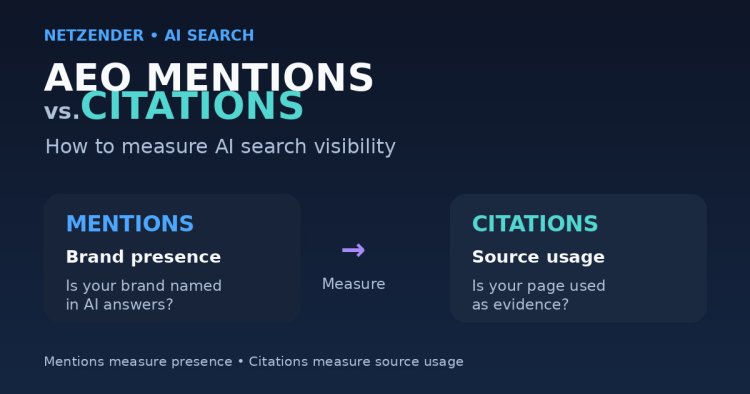
A brand mention and a citation are not the same thing in AI search. A mention happens when an AI-generated answer names or discusses your brand. A citation happens when the answer visibly references a page or URL from your website as a source. You can earn one without the other, which is why measuring only “AI visibility” can hide what is actually happening.
For SEO and content teams, the useful question is no longer simply, “Do we rank?” It is also: Are AI systems aware of our brand, do they use our pages as evidence, and does that visibility lead to visits or business outcomes?
This guide explains the difference between mentions and citations, how to measure both, and how to build an AEO measurement framework that works alongside traditional SEO.
What Is an AEO Mention?
In answer engine optimization, a mention occurs when an AI-generated response refers to your brand, company, product, expert, or other identifiable entity.
For example, imagine someone asks an AI assistant:
What are some useful SEO platforms for a small marketing team?
If the answer names your company but does not link to your website, you have earned a brand mention but not necessarily a citation.
Mentions are valuable because they reveal whether an AI system associates your brand with a topic, category, problem, or buying decision. They can also reveal something traditional rank tracking cannot: how AI systems describe your brand.
That description matters. A company can have strong mention visibility but still be described inaccurately, incompletely, or in a way that does not reflect its current positioning.
What Is an AI Citation?
A citation occurs when an AI-generated answer visibly references content from a website as a source. Depending on the platform, this may appear as a linked source, citation card, supporting link, footnote, or another form of source attribution.
Microsoft provides one of the clearest first-party measurement systems for this. Its AI Performance report in Bing Webmaster Tools reports total citations, cited pages, grounding queries, and page-level citation activity across supported AI experiences.
An important distinction is that Bing explicitly says citation activity does not represent ranking, authority, importance, clicks, or traffic. It simply tells you that your content was visibly used or shown as a source.
That distinction prevents a common AEO mistake: treating every citation as if it were the equivalent of a number-one organic ranking.
Mentions vs. Citations: The Difference
| Signal | What it tells you | What it does not prove |
|---|---|---|
| Brand mention | The AI associates your brand with the topic or answer | That your website was used as the source |
| Website citation | A page from your site was visibly referenced as a source | That your brand was prominently recommended |
| AI impression | A link or page from your site appeared in a supported AI search feature | That the user clicked or remembered your brand |
| AI referral visit | A user clicked through from an AI experience to your site | That the visit converted |
| Conversion | AI-originated discovery contributed to a meaningful outcome | Which single AI exposure caused the decision |
The strongest AEO measurement therefore uses several layers instead of one headline metric.
Why a Mention Can Happen Without a Citation
AI systems can discuss known entities without visibly citing every statement in an answer. A brand may therefore appear because it is strongly associated with a category, widely discussed across the web, present in retrieved information, or already represented in the system's broader knowledge.
This creates an important measurement case:
- Your brand is frequently mentioned.
- Your own website is rarely cited.
That may mean you have good entity-level awareness but weak owned-source visibility. In practical terms, other websites may be doing more of the work of explaining your brand than your own content.
That is a useful signal for content teams: strengthen product pages, documentation, comparison pages, research, author pages, FAQs, and other first-party resources that clearly establish facts about the entity.
Why a Citation Can Happen Without a Strong Brand Mention
The reverse is also possible. An article from your website may be used as supporting evidence even when your brand is not central to the answer.
For publishers, research sites, niche blogs, and knowledge-heavy businesses, this can be a positive sign. It means individual pages have value as evidence even if brand awareness is still developing.
Page-level citation data is particularly useful here because it lets you discover which content acts as a source rather than simply which pages attract search clicks.
Six AEO Metrics Worth Tracking
1. Mention Rate
For a fixed monitoring set, mention rate can be calculated as:
Prompts where your brand is mentioned ÷ total tracked prompts × 100
This is best treated as a controlled monitoring metric, not a universal industry standard. Keep the prompt set, geography, platform, and testing methodology reasonably consistent if you want to compare changes over time.
2. Citation Rate
A useful working formula is:
Prompt runs containing a citation to your domain ÷ total tracked prompt runs × 100
You can also measure citation rate at the page, topic, funnel stage, or product level.
3. Citation Share
Bing's AI Performance reporting now includes Citation Share, which represents the percentage of citations attributed to your site out of all citations shown for a specific grounding query.
This is different from total citation volume. A site can gain citations while losing relative citation share if the overall source pool expands faster.
4. Cited Pages
Track which URLs are actually being referenced. This can reveal patterns that traditional SEO reports miss.
You may discover that:
- research pages earn citations more often than product pages;
- comparison content performs better than broad category pages;
- older pages continue to be cited despite declining organic traffic;
- a small number of pages account for most AI-source visibility.
5. Generative AI Impressions
Google now provides a dedicated Generative AI performance report in Search Console for supported Search generative AI experiences such as AI Overviews and AI Mode.
This gives site owners a first-party way to see which URLs appear and how generative-AI impressions change over time.
Do not confuse this with brand mention tracking. Search Console is reporting visibility of your site or URLs inside Google's Search experiences, not every time an AI response happens to name your brand.
6. AI Referral Traffic and Conversions
AEO should eventually connect to business outcomes.
OpenAI states that publishers can track referral traffic from ChatGPT because referral URLs automatically include utm_source=chatgpt.com. See OpenAI's publisher guidance.
In analytics, track AI-originated sessions alongside outcomes such as:
- newsletter subscriptions;
- trial starts;
- lead submissions;
- product sign-ups;
- revenue;
- assisted conversions;
- branded search growth.
Citations without downstream impact may still build authority, but traffic and conversions tell you whether that visibility is producing measurable business value.
A Practical AEO Measurement Funnel
A useful way to think about AI search performance is as a sequence:
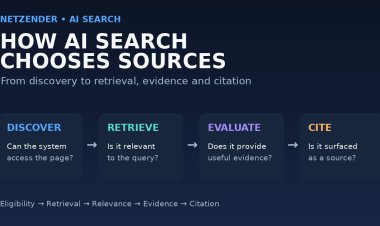
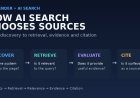
Eligibility → Retrieval → Mention → Citation → Click → Conversion
Eligibility
Can the relevant system access and use your content?
For Google AI features, Google says the same foundational SEO requirements apply: a page must be indexed and eligible to appear in Search with a snippet to be eligible as a supporting link. There are no special AI-only technical requirements. See Google's AI features documentation.
For ChatGPT search, OpenAI recommends ensuring that OAI-SearchBot is not blocked if you want your public content to be discoverable and eligible to appear in search results.
Retrieval
Does the system retrieve your content for relevant topics?
Bing exposes part of this layer through grounding queries: grouped phrases associated with retrieval and citation activity.
Mention
Does the answer identify your brand or entity?
Citation
Does the answer visibly reference one of your pages?
Click
Does the user leave the AI experience and visit your website?
Conversion
Does that visitor complete a meaningful business action?
Each stage can fail independently. That is why “we received 500 AI citations” is not enough to evaluate an AEO program.
How to Build an AEO Dashboard
A practical monthly dashboard does not need dozens of metrics. Start with:
| Metric | Review frequency | Primary question |
|---|---|---|
| Mention rate | Weekly or monthly | Are AI systems talking about us? |
| Citation rate | Weekly or monthly | Are they using our site as a source? |
| Cited pages | Monthly | Which content earns source visibility? |
| Citation share | Monthly | How much of the citation space do we occupy? |
| Generative AI impressions | Weekly or monthly | Which pages appear in Google's AI search features? |
| AI referral sessions | Weekly | Are people clicking through? |
| AI-assisted conversions | Monthly | Does this visibility create business value? |
Segment these metrics by topic or product whenever possible. A single site-wide visibility score can hide strong performance in one business area and weak performance in another.
How to Improve Mentions and Citations
There is no guaranteed technique that forces an answer engine to mention or cite a page. The useful approach is to improve the underlying evidence and accessibility of your content.
Make important entities explicit
Clearly state what your company, product, person, or service is. Avoid forcing systems to infer basic relationships from vague marketing language.
Answer specific questions directly
Use descriptive headings and concise explanatory passages. If a page answers a comparison, definition, process, or factual question, make that answer easy to locate.
Support claims with evidence
Add original examples, methodology, data, references, screenshots, tests, or other evidence where appropriate. Bing's own AI-search guidance recommends supporting claims with evidence and keeping information clear and well structured.
Keep high-value pages current
Outdated prices, product capabilities, policies, statistics, and dates weaken usefulness. Prioritize refreshes for pages already earning impressions or citations.
Strengthen internal context
Use internal links to connect related concepts and create coherent topic clusters. For more resources, browse Netzender's SEO section and our collection of free SEO and growth tools.
Keep technical search fundamentals healthy
AEO does not replace SEO. Crawlability, indexing, canonicalization, page quality, site architecture, performance, and clear metadata remain foundational.
Do Citations Guarantee More Traffic?
No.
A citation means your content was referenced. It does not mean the user clicked it. Bing explicitly distinguishes citations from traffic and engagement, and Google separately reports clicks and impressions in Search Console.
This is one reason AEO teams should avoid celebrating citation counts in isolation. A citation may create value through brand exposure, trust, or later branded searches even without an immediate click, but that value needs to be evaluated with additional signals.
Which Matters More: Mentions or Citations?
Neither metric wins in every situation.
If your goal is brand awareness, mentions and share of voice may matter most.
If your goal is publisher or content authority, citations and cited pages may be more useful.
If your goal is traffic acquisition, referral visits and generative-search clicks matter more.
If your goal is revenue, conversions and assisted conversions should ultimately determine whether the strategy is working.
The mature approach is to measure the entire chain rather than optimizing one number.
AEO Measurement Checklist
- Define a stable set of commercially and informationally relevant prompts.
- Track brand mentions separately from website citations.
- Measure which URLs earn citations.
- Review Bing grounding queries and citation activity when available.
- Monitor Google's generative AI Search Console report.
- Track ChatGPT and other AI referral traffic in analytics.
- Measure conversions, not just visibility.
- Segment reporting by topic, product, or funnel stage.
- Review changes over time instead of treating one test as definitive.
- Keep SEO, crawlability, content quality, and entity clarity strong.
Final Takeaway
Mentions measure presence. Citations measure source usage. Traffic measures response. Conversions measure business impact.
AEO becomes useful when those signals are separated instead of compressed into a vague “AI visibility score.” Build a repeatable prompt set, combine platform data with analytics, identify the pages AI systems actually use, and improve the content that supports your most important topics.
That creates a measurement system that can survive changes in individual AI products because it focuses on the underlying journey: from being discoverable, to being referenced, to earning a visit, to creating value.