Airline Marketing Campaigns in 2026: What the Best Campaigns Get Right
What airline marketers can learn from recent KLM, British Airways, and Emirates campaigns about brand, loyalty, segmentation, experience, and measurement.
 Netzender Editorial Team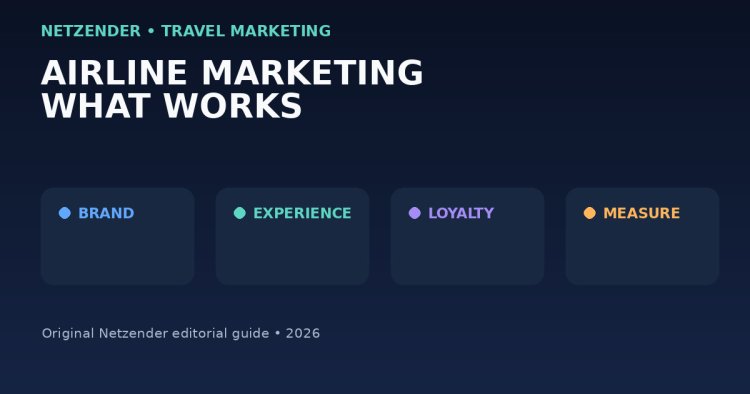
The best airline marketing does more than advertise a destination or show a business-class seat. It gives travelers a reason to remember the airline itself.
That distinction is especially important in a market where many carriers fly similar routes, use similar aircraft, and compete for the same leisure and business travelers.
Recent airline campaigns show several approaches working together: distinctive brand personality, travel experiences, loyalty, personalization, product proof, partnerships, and creative ideas that work beyond a standard video ad.
This guide looks at practical lessons marketers can take from airline campaigns and apply to travel, hospitality, tourism, and other experience-driven businesses.
1. Sell the Experience, Not Only the Route
Airlines sell transportation, but customers often buy for a different reason: a family visit, holiday, business opportunity, major event, or personal experience.
KLM's 2026 “Travel Well Instructions” campaign uses a familiar airline element — cabin safety instructions — as a creative device for encouraging passengers to make their journeys meaningful and memorable.
The lesson is broader than aviation:
The functional product gets the customer there. The marketing should explain why the experience matters.
2. Build Around a Distinctive Brand Asset
British Airways' 2026 US campaign “Everything's Better with a British Accent” did not try to communicate every product feature.
Instead, it used a simple brand asset: British identity, humor, hospitality, and the recognizable accent of its crew.
This makes a campaign easier to remember because competitors cannot copy the core idea without appearing derivative.
Strong distinctive assets may include:
- voice or language;
- staff personality;
- visual identity;
- heritage;
- home country;
- service rituals;
- product design;
- customer community.
3. Make the Campaign Work Outside the Advertisement
British Airways extended its campaign into a New York subway takeover, bringing the airline's British personality into the physical commute.
This matters because a campaign becomes more memorable when the idea works across multiple touchpoints.
Instead of asking only “What should our ad say?”, ask:
- Can this become an event?
- Can customers interact with it?
- Can staff participate?
- Can it work in social content?
- Can partners amplify it?
- Can the idea appear at the point of sale?
4. Use Employees as Part of the Brand
Airlines have a valuable brand asset that many digital companies lack: visible frontline employees.
KLM's campaign uses its own cabin crew rather than treating service as an abstract promise.
Employees can make claims about hospitality, expertise, culture, and service feel more tangible.
This principle works in hotels, travel agencies, restaurants, healthcare, education, and professional services as well.
5. Loyalty Is a Marketing Channel
Airline loyalty programs are not merely reward systems. They are ongoing marketing relationships.
Emirates Skywards' 2026 “Season of Rewards” campaign combined bonus miles, tier incentives, Cash+Miles savings, partner offers, and earning opportunities across the broader travel journey.
This illustrates an important shift:
Marketing does not stop when the ticket is purchased.
A loyalty ecosystem creates reasons to communicate before, during, and after travel.
6. Give Customers More Than One Way to Participate
Good promotional campaigns do not force every customer into the same action.
A loyalty campaign might offer:
- extra points;
- status benefits;
- partner rewards;
- discounted redemptions;
- special experiences;
- family benefits;
- business-travel incentives.
Different rewards appeal to different traveler segments.
7. Segment by Real Travel Need
Airline customers are not one audience.
Useful segments can include:
- corporate travelers;
- SMEs;
- premium leisure;
- families;
- students;
- frequent flyers;
- price-sensitive travelers;
- travel agents;
- connecting passengers.
Emirates' participation at GBTA 2026, for example, focused specifically on corporate clients, SMEs, travel-management companies, tailored products, and Business Rewards.
The marketing message is more credible when it reflects the customer's actual travel context.
8. Product Improvements Are Marketing Material
A campaign becomes stronger when the experience supports the promise.
New cabins, lounges, Wi-Fi, apps, loyalty benefits, onboard services, and improved operations all provide concrete material for storytelling.
Marketing and product should therefore work together rather than treating campaign creation as a layer added at the end.
9. Create a Content System Around the Campaign
One campaign idea can produce many content formats:
- hero film;
- short vertical video;
- behind-the-scenes content;
- crew interviews;
- destination stories;
- customer stories;
- email;
- airport media;
- social posts;
- PR;
- partner content.
This improves campaign efficiency because the team is not inventing a completely unrelated idea for every channel.
10. Use Performance Marketing Without Losing the Brand
Short-term advertising systems encourage marketers to optimize for clicks and conversions.
Those metrics matter, but travel decisions can have long consideration periods.
A healthy marketing program combines:
- brand building;
- demand generation;
- route or product campaigns;
- retargeting;
- loyalty;
- CRM;
- conversion advertising.
For more on automation and advertising systems, see our guide to Meta AI advertising.
11. Measure More Than Click-Through Rate
Campaign measurement can include:
- incremental bookings;
- new loyalty members;
- repeat purchase;
- brand search;
- direct traffic;
- route awareness;
- engagement;
- earned media;
- customer lifetime value.
The right metric depends on the campaign objective.
12. Local Relevance Can Strengthen a Global Brand
British Airways used a specifically British idea in the United States. That is a useful reminder that localization does not always mean removing the brand's origin.
Sometimes the strongest local campaign highlights the difference customers find interesting.
13. Make the Offer Easy to Understand
Creative campaigns still need clear commercial communication.
Customers should quickly understand:
- who qualifies;
- what the benefit is;
- when it applies;
- what action is required;
- what restrictions exist.
Complex loyalty or fare promotions lose effectiveness when customers cannot understand the value.
14. Use Partnerships to Expand the Journey
Airlines increasingly market beyond the flight itself through hotels, cards, lounges, ground transport, tourism partners, entertainment, and other services.
This turns one purchase into a broader travel ecosystem and creates more opportunities for relevant communication.
15. A Practical Airline Campaign Framework
Before launching a campaign, define:
- Audience: Who exactly is this for?
- Travel need: Why are they traveling?
- Brand asset: What makes us recognizable?
- Promise: What do we want them to feel or believe?
- Proof: Which product or service supports the promise?
- Offer: Is there a commercial incentive?
- Channels: Where should the idea live?
- Measurement: What outcome defines success?
Browse more strategy in our Marketing section.
Final Takeaway
The strongest airline campaigns do not compete only on destinations and fares. They create a recognizable point of view around travel.
KLM emphasizes meaningful journeys, British Airways turns British identity into a brand asset, and Emirates uses loyalty and segmentation to create ongoing customer value.
The general lesson is simple: start with a distinctive brand idea, support it with a real product experience, adapt it to specific audiences, and measure the business outcome instead of treating advertising as isolated creative output.