AI Content Monetization in 2026: How Publishers Can Get Paid Beyond Clicks
AI is changing publisher economics. Compare new licensing, pay-per-use and publisher-control models and learn what smaller sites should do now.
 Netzender Editorial Team
AI answer engines are changing one of the web's oldest economic assumptions: a crawler reads a page, search sends a visitor back, and the publisher monetizes that visit.
That exchange is becoming less predictable. An AI system may retrieve information from a publisher, summarize it inside an answer, cite the source and still generate far fewer page views than a traditional list of search results.
For publishers, the important question in 2026 is no longer simply whether AI crawlers should be allowed or blocked. A more useful question is: when an AI system uses valuable content, what commercial model should apply?
Several companies are experimenting with different answers. Cloudflare is building usage-based mechanisms, Microsoft is developing a licensing marketplace, and Google is expanding publisher partnerships around AI experiences. None of these approaches has become a universal standard, but together they show where publisher economics may be heading.
Why the Traditional Click Model Is Under Pressure
The open web traditionally rewarded publishers when discovery produced a visit. A reader searched, clicked a result, landed on a site and could then generate advertising revenue, subscribe, buy something or become part of the publisher's audience.
Generative search changes the sequence. Retrieval can happen before the user sees a publisher's page. The answer itself may satisfy part or all of the user's need.
This does not mean AI referrals are worthless. A smaller number of highly qualified visitors can still be commercially valuable. But publishers need to measure AI visibility differently from ordinary rankings.
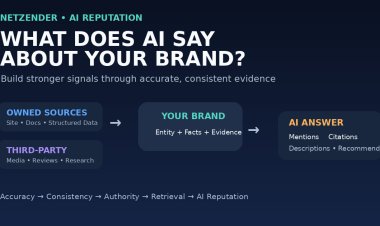
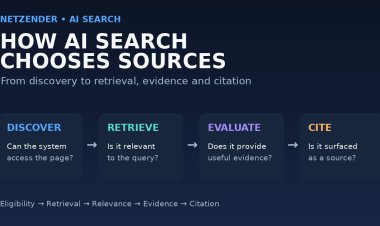
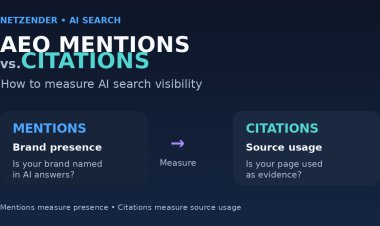
That is why it is useful to separate AI mentions from citations and understand how AI search systems choose supporting sources.
Model 1: Charge for Crawler Access
Cloudflare introduced Pay Per Crawl as an attempt to give site owners more control over AI crawler access. Instead of treating access as only allow or block, the model creates a path in which an AI crawler can be asked to pay for access.
The concept matters because crawling has an infrastructure cost and the retrieved material may have commercial value beyond the visit itself.
However, crawl-based charging has an obvious limitation: a page might be fetched once and then become useful in many downstream answers, while another page might be crawled repeatedly but rarely used.
That difference led to a second model.
Model 2: Pay for Actual Use
Cloudflare's newer Pay Per Use initiative moves the economic event closer to the moment content creates value.
In the beta model, a buyer can offer a price for a defined use of content and the content owner can decide whether to accept. Conceptually, this is closer to licensing than to simply charging for bandwidth.
For publishers, the distinction is important:
- Pay per crawl attaches value to access.
- Pay per use attempts to attach value to actual utilization.
- Referral monetization still attaches value to the visitor who reaches the site.
These models could coexist rather than replace one another.
Model 3: A Marketplace for Licensed Publisher Content
Microsoft's Publisher Content Marketplace takes a marketplace approach.
Microsoft describes it as a way for publishers to define licensing and usage terms while AI builders discover and license content for grounding scenarios. The model includes publisher-defined terms and usage reporting.
This matters because direct licensing does not scale well if every small publication has to negotiate independently with every AI company.
A marketplace could reduce that coordination problem. It could also make premium archives, specialized databases and expert content easier to license without transferring ownership of the underlying material.
The important distinction is that Microsoft's current framing is about licensed content used for grounding and display rather than a blanket sale of publisher content for model training.
Model 4: Commercial Publisher Partnerships
Google is taking a different route through commercial publisher partnerships and experiments around AI-powered news experiences.
Google has said it is piloting a program with publishers in multiple countries and testing features such as AI-powered article overviews that retain attribution and links to the participating publications.
This approach looks more like platform-publisher partnership than a universal open marketplace.
For smaller independent sites, that difference is significant. A bilateral commercial partnership may work well for a major publisher but is difficult to replicate across millions of smaller sites.
No Single Model Has Won
Publishers should resist the temptation to treat any one announcement as the final business model for the AI web.
Several unresolved questions remain:
- How should the value of one article used in an AI answer be calculated?
- Should a citation have a different price from unseen grounding use?
- How should original research be valued compared with commodity information?
- How can smaller publishers participate without complex negotiations?
- How should publishers distinguish search retrieval, agent use and model training?
- What level of reporting will publishers receive?
The market is still being designed.
What Small Publishers Should Do Now
1. Measure AI traffic separately
Create a dedicated reporting view for referrals from AI products. Track sessions, engagement, conversions and revenue rather than looking only at raw traffic volume.
2. Monitor crawler behavior
Review server logs or bot-control dashboards to understand which automated systems are requesting your content and how frequently they do it.
3. Decide what content is actually licensable
A generic rewritten news article is difficult to differentiate. Original research, proprietary data, expert analysis, calculators, structured databases, local knowledge and unique archives are much more defensible assets.
This reinforces the same principle behind building useful tools as search assets: create something that has value beyond another version of information already available everywhere.
4. Keep ownership signals clean
Maintain clear canonical URLs, author information, publication dates, structured data, internal linking and organization details. Monetization will not compensate for a site whose content ownership and provenance are ambiguous.
5. Do not block every AI crawler blindly
Blocking can be appropriate, but it should be a business decision rather than a reflex.
An AI system might generate no meaningful value, or it might provide citations, qualified visitors, brand discovery or future licensing opportunities. Measure before making a permanent policy.
A Simple Publisher Decision Framework
| Situation | Possible Strategy |
|---|---|
| Commodity informational content | Focus on referral value and audience conversion |
| Original research or proprietary data | Evaluate licensing and controlled access |
| High crawler cost with little value | Rate-limit, restrict or negotiate access |
| Strong AI citations but weak traffic | Measure brand lift and commercial intent separately |
| Premium archive or specialist content | Explore usage-based or marketplace licensing |
SEO and AEO Still Matter
New monetization infrastructure does not make search optimization irrelevant.
AI systems still need accessible, understandable and trustworthy source material. Search eligibility, canonicalization, entity clarity and useful content remain foundational.
The difference is that publishers increasingly need to optimize for two outcomes:
- earning the visit when a click is appropriate;
- capturing value when content is useful even before a click occurs.
Publisher Checklist for the AI Web
- Measure AI referral traffic separately.
- Monitor crawler frequency and behavior.
- Identify original assets worth licensing.
- Keep canonical and authorship signals clean.
- Separate AI training policy from search/retrieval policy.
- Track citations as well as visits.
- Build direct audience channels such as email and community.
- Do not depend on a single platform monetization model.
- Review emerging licensing programs periodically.
Final Takeaway
The future publisher economy is unlikely to rely on clicks alone.
Cloudflare's pay-per-access and pay-per-use experiments, Microsoft's marketplace approach and Google's commercial publisher partnerships show several possible paths toward compensating content owners when AI systems use their work.
The practical strategy for an independent publisher is not to wait for one universal solution. Build differentiated content, understand how machines use it, measure the value of AI referrals and citations, maintain control over access, and stay ready to participate when a licensing model becomes commercially useful.